
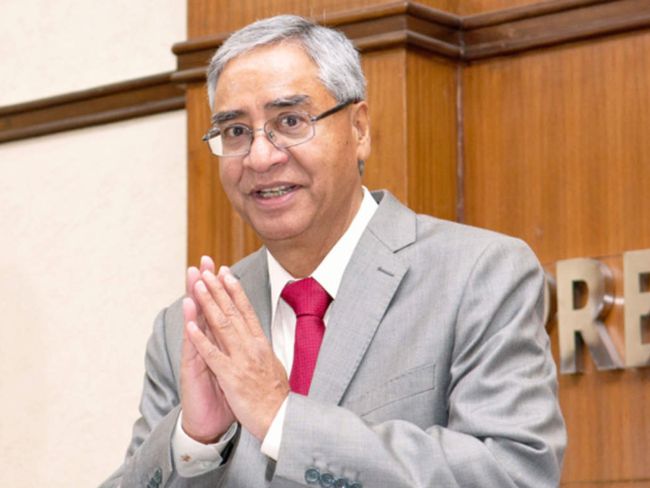
Who is Sher Bahadur Deuba?
Sher Bahadur Deuba (born 13 June 1946, Dadeldhura) is a Nepalese politician and a five-time Prime Minister, as well as one of the country’s most experienced leaders. As President of the Nepali Congress, he has guided the party through significant democratic changes and political upheavals. He gained political prominence quickly, and indeed, his commitment to upholding parliamentary democracy impressed his followers. Nevertheless, his career reflects a blend of challenges and successes in Nepalese politics.
Quick Facts
- Full Name: Sher Bahadur Deuba
- Born: 13 June 1946, Asigram (Ashigram), Dadeldhura District, Nepal
- Political Party: Nepali Congress (NC)
- Position: President of Nepali Congress, Former Prime Minister of Nepal (five terms)
- Parliamentary Career: First elected in 1991; multiple re-elections
- Prime Minister Terms: 1995-1997, 2001-2002, 2004-2005, 2017-2018, 2021-2022
- Education: BA (Humanities), BL (Law), MA (Political Science) – Tribhuvan University; Research Fellow-London School of Economics (1989-1990)
- Spouse: Arzu Rana Deuba (politician and social worker)
- Key Focus Areas: Democracy, governance reform, constitutional order, coalition politics
- Achievements: Oversaw 2017 local, provincial, and federal elections under the new constitution; defended parliamentary democracy against authoritarian interventions.
Early Life and Education
Sher Bahadur Deuba was born on 13 June 1946 in Asigram, Dadeldhura District of the remote West of Nepal. He was brought up in a humble family; life in the country influenced his attitude towards society and government. He did his tertiary education at Tribhuvan University, where he earned a degree in humanities, law as well and political science. He later enhanced his studies during the years of 1989 to 1990 as a Research Fellow at the London School of Economics. These educational achievements therefore gave him the groundwork for his political career and leadership positions that lasted long.
Sher Bahadur Deuba’s Personal Life and Health
Sher Bahadur Deuba is a married man with a son and a wife, Arzu Rana Deuba, who is both a social worker and a politician. Moreover, their partnership has kept him closely connected to politics and various social causes. Although he has generally enjoyed good health despite a demanding political life, old age has occasionally raised questions about his stamina. Nevertheless, he remains an active party leader and a prominent figure, capable of handling even the most stressful political situations. Overall, his stable personal life and sustained health have enabled him to remain at the heart of Nepali politics.”
Sher Bahadur Deuba Entry into Politics
Deuba was an activist in politics in his time as a student before democracy was restored in 1990. Therefore, very shortly after that, he challenged the first general elections in 1991 and was elected to Parliament. His triumph was the start of a journey that has seen him become one of the most well-known political personalities in Nepal.
Rise to Leadership
Sher Bahadur Deuba entered national politics post-1990 and soon ascended to the Nepali Congress. He served as Prime Minister 5 times: in 1995, 2001, 2004-2005, 2017, and 2021. The political system was strained during this time; crises like the Maoist war, royal interferences, and constitutional clashes were experienced. However, his several resurgences showed how tough he is and made him one of the most seasoned politicians in Nepal.
Sher Bahadur Deuba’s Role as Prime Minister
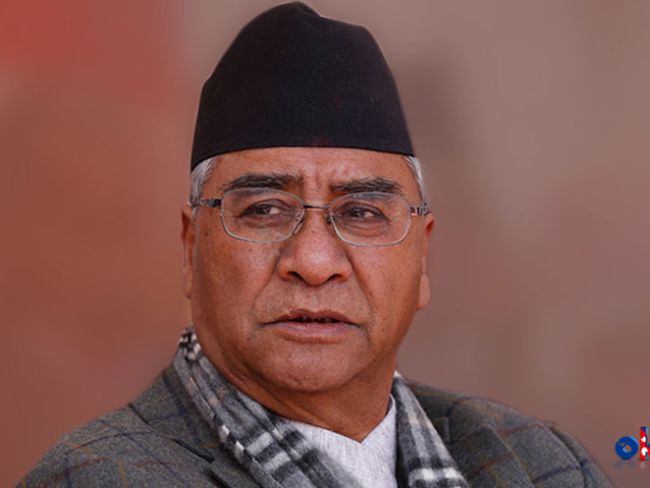
As Prime Minister, Deuba focused on democracy, governance, and elections. For example, in 2017, he organized Nepal’s first federal, provincial, and local elections under the new constitution. Subsequently, in 2021, the Supreme Court restored Parliament and reinstated him as Prime Minister. Therefore, these actions demonstrated his firm commitment to constitutional rule and democratic institutions.
Sher Bahadur Deuba in Nepali Congress Leadership
Deuba assumed the presidency of the Nepali Congress in 2016, solidifying his position as the most influential leader of the party. He was also a representative of Nepal on the global stage as Vice President of the Socialist International (2008-2012). In addition, his leadership both within the country and abroad reflects his capacity to strike a balance between domestic and international priorities.
Public Image and Criticism:
Generally, Sher Bahadur Deuba is considered to be a firm socialist who has come forward to save parliamentary politics in Nepal in times of crisis. Furthermore, his endurance, calm control, and the ability to stand by his belief system make him admired among those who support him. Conversely, his critics criticize him as weak in making decisions, associating with weak allies, and the use of gradual reforms. Consequently, he is still split in his public image, with some saying that he enjoyed the experience and others citing that there is no major change.
Impact and Legacy of Sher Bahadur Deuba
The success of Deuba is largely due to his role in guiding Nepal through challenging democratic shifts, maintaining political stability, and increasing the presence of the Nepali Congress in rural areas. Furthermore, he is remembered for having preserved the democratic process and strengthened institutions during a critical period.
Gen Z Protest and Controversies
Protests Sparked by the Ban
As a result, the September 2025 Gen Z protests followed after the government banned social media, which is considered a direct assault on free speech.
Sher Bahadur Deuba as a Target
Consequently, he became a representative of the long-standing elite and the target of the young Nepalis who had to bring changes in the system of the old elite.
Violent Clashes
“Protesters broke into his Budhanilkantha residence, causing significant damage to the property and threatening Deuba and his wife, Arzu Rana Deuba.
Generation gap
Ultimately, the incident highlighted a stark contrast between the old political leadership and the new generation, with Gen Z speaking out.
Electoral History
| Election Year | Position | Constituency | Votes | Result |
|---|---|---|---|---|
| 1991 | Member of Parliament | Dadeldhura 1 | 24,570 | Elected |
| 1994 | Member of Parliament | Dadeldhura 1 | 20,701 | Elected |
| 1999 | Member of Parliament | Dadeldhura 1 | 28,651 | Elected |
| 2008 | Member of Constituent Assembly | Kanchanpur 4 | 20,529 | Elected |
| 2013 | Member of Parliament | Dadeldhura 1 | 23,920 | Elected |
| 2017 | Member of Parliament | Dadeldhura 1 | 28,446 | Elected |
| 2022 | Member of Parliament | Dadeldhura 1 | 25,534 | Elected |
Conclusion
The history of Sher Bahadur Deuba, from a simple family of Dadeldhura to a five-term Prime Minister, is the history of a determined and committed individual who believes in democracy. Additionally, he shaped the political process of Nepal by election, coalition leadership, and reforms in the Nepalese government as President of Nepali Congress. But in the professional world, he has encountered scandals, been accused of weakness, and has had violent protests organized in his house by the protesters of Gen Z. Still, despite all these challenges, he has been an example of political survival and civic duty. All in all, it is an experience, perseverance, danger, and achievement of the long-term life of Deuba in Nepalese politics that has shown the continuity of leadership.
You May Also Like:

Comments are closed