

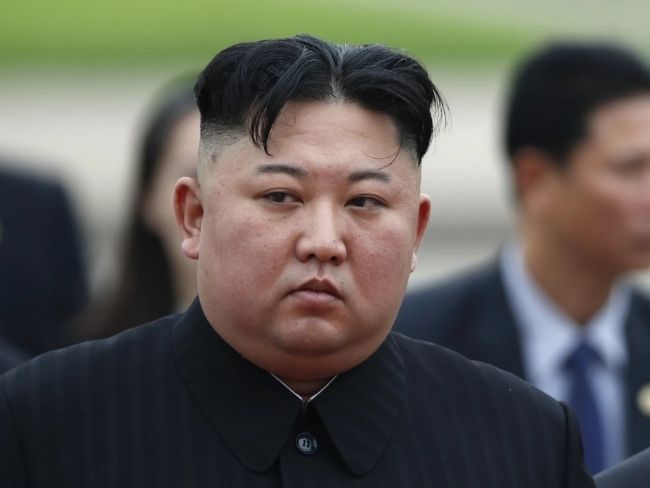
Kim Jong Un was born on January 8, 1984. Some sources say he may have been born in 1983. He is the third and current Supreme Leader of North Korea. The country is officially called the Democratic People’s Republic of Korea (DPRK). Kim Jong Un is the youngest son of Kim Jong Il. He is also the grandson of Kim Il-sung, who founded North Korea. He is part of the third generation of the Kim family to lead the country. His rise to power has helped shape one of the world’s most secretive and isolated nations.
Early Life and Education
We know little about Kim Jong Un’s early life because North Korea keeps such details secret. He was likely born in Pyongyang, though some sources claim he may have been born in Switzerland or elsewhere in North Korea. His mother, Ko Yong Hui, was one of Kim Jong Il’s partners and passed away in 2004.
Kim spent much of his childhood outside North Korea, attending school in Switzerland. He studied at the Liebefeld-Steinhölzli school in Bern under the fake name “Pak Un” or “Pak Chol.” Classmates described him as shy and somewhat lonely, but he enjoyed basketball and Western culture. He especially admired NBA star Michael Jordan and supported the Chicago Bulls.
In the early 2000s, Kim returned to North Korea. He enrolled at Kim Il-sung Military University to prepare for leadership. Unlike his father, who became heir later in life, Kim received early training to take over. While his academic records remain unclear, most believe he received both military and political education to ready him for rule.
Succession and Rise to Power
Before officials named Kim Jong Un as heir, many expected his older brothers to take over. Kim Jong Nam, the eldest son, once stood as the likely successor, but he lost favor after he attempted to enter Japan with a fake passport. Authorities viewed Kim Jong-chul, Kim Jong Un’s half-brother, as unfit to lead due to his lack of leadership skills.
In 2010, leaders officially promoted Kim Jong Un, appointing him as a four-star general and assigning him key roles in the ruling Workers’ Party of Korea. They also introduced him to the public as the chosen successor. When Kim Jong Il died in December 2011, Kim Jong Un quickly assumed power as Supreme Leader, tightening his grip on the country.
In his early years, Kim actively consolidated power and eliminated rivals. In the most notable case, he ordered the execution of his uncle, Jang Song-thaek, in 2013. As the second most powerful figure in North Korea, Jang’s execution sent a clear message about Kim’s ruthlessness and intolerance for dissent.
Leadership and Political Style
Kim Jong Un leads North Korea with a mix of old-style control and some new changes. He inherited a government that has a strong cult of personality. The government tightly controls the people and runs the economy centrally.
- Military and Nuclear Program: Kim Jong Un aggressively pushed North Korea’s nuclear program forward, conducting multiple tests and developing ICBMs capable of reaching the United States. His actions raised tensions with the U.S., South Korea, and Japan, prompting heavy international sanctions. Despite his hardline stance, Kim took a diplomatic turn in 2018 and 2019 by meeting South Korean President Moon Jae-in and U.S. President Donald Trump. While the talks failed to produce concrete denuclearization deals, they marked a major break from decades of hostility.
- Economic Policy: Kim has shown some interest in changing the economy. He introduced policies called the “May 30th Measures.” These give more freedom to state businesses and allow some private markets. But overall, North Korea’s economy is still tightly controlled and hurt by international sanctions.Kim has also focused on building new infrastructure. He has helped build modern places in Pyongyang, like amusement parks, ski resorts, and tall apartment buildings. These projects show he wants to improve life for the elite and show progress in the country.
Cult of Personality and Public Image
The Kim family has long maintained a strong cult of personality. Kim Jong Un has preserved and reinforced this system. The North Korean government refers to him as the “Supreme Leader” and claims he continues the revolutionary legacy of his grandfather, Kim Il-sung. State propaganda portrays him as a young, powerful leader who embodies the nation’s hopes.
In North Korea, authorities have placed statues, monuments, and portraits of Kim Jong Un everywhere. They require citizens to show loyalty through public events, political education sessions, and self-criticism meetings. The government tightly controls all media and ensures it shares only favorable stories and images of Kim with the public.
Personal Life
Kim Jong Un keeps his personal life mostly private. But some information is known. He is married to Ri Sol-ju, who used to be a singer and beauty queen. They have at least one child, maybe more. Their daughter, Ju Ae, has been seen with Kim in public. This has made people wonder about who will lead next.
Kim likes basketball, music, and movies. He has a more modern taste than past leaders. His meetings with former NBA player Dennis Rodman got a lot of attention from the world. This showed a different side of his personality.
Health and Speculation
There have been many rumors about Kim Jong Un’s health. Sometimes he disappears from public view, and his appearance changes. These rumors became stronger in 2020 and 2021. But North Korea has not said anything official. His health is a concern for many people because the country is very secretive.
Legacy and Future Prospects
Kim Jong Un plays a crucial role in shaping North Korea’s future. He maintains tight control over the country while introducing small economic reforms. He has also engaged in talks with other nations. However, serious issues—such as human rights abuses, political repression, and nuclear weapons—still persist.
The question of succession also raises concern. Unlike his father and grandfather, Kim has allowed his youngest daughter to appear more frequently in public. These appearances have led many to speculate that she might continue the family’s leadership. The way this transition unfolds could significantly impact the country’s future stability.
Conclusion
Kim Jong Un is one of the most mysterious and debated leaders today. He continues his family’s strict and controlling rule. But he also brings new challenges with nuclear threats, talks with other countries, and slow economic changes. Even though there have been some diplomatic meetings, North Korea is still very isolated and faces many sanctions. The people in North Korea live with many limits on their freedom. The world is watching Kim closely. His choices will affect not just Korea but also global security and international relations in the future.
You May Also Like:


Comments are closed