
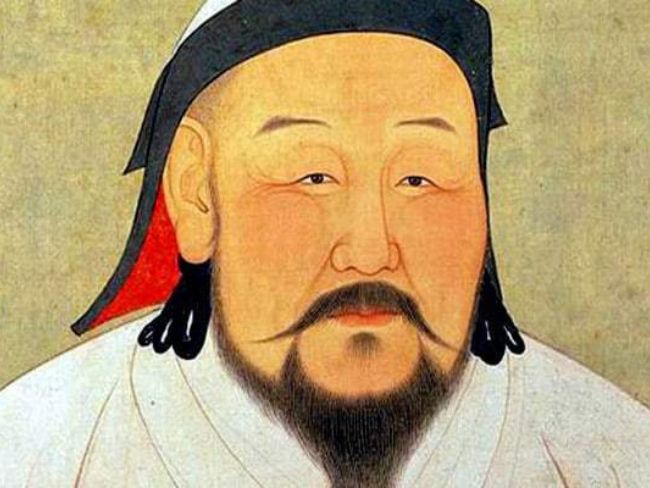
The Mongolian warlord Genghis Khan stands as one of the most powerful yet astonishing personalities in human historical record. From a simple background, he constructed the largest sequence of controlled territories history records in the span from Eastern Europe to the Pacific Ocean. Through leadership and tactical methods together with political strategies, Genghis Khan influenced the Mongol Empire, which set long-lasting significant consequences across the world. His name creates feelings of both apprehension and admiration and wonderment, so his place stands among the most enigmatic conquerors throughout history.
Quick Facts
- Full Name: Genghis Khan
- Date of Birth: c. 1162
- Place of Birth: Delüün Boldog, Mongolia
- Height: 5 feet 8 inches (173 cm)
- Early Life: Born into a nomadic tribe, faced hardship after his father’s death; united Mongol tribes through strategic alliances and warfare.
- Military Success: Founded the Mongol Empire, the largest contiguous empire in history, through relentless conquests across Asia and Europe.
- Leadership Style: Known for his military brilliance, strict discipline, and merit-based leadership; promoted trade and communication across the Silk Road.
- Legacy: He revolutionized warfare, established the Pax Mongolica, and left a lasting impact on world history; his descendants ruled vast territories for centuries.
- Personal Life: He had many wives and children; his lineage is believed to have spread widely, with millions of people today possibly being his descendants.
Early Life and Struggles
Genghis Khan appeared on the world stage with his birth name, Temujin, when he came into existence in 1162 AD. From this start, his life was filled with struggles and discomfort. When Temujin reached childhood age, his father, Yesugei, fell victim to a deadly poison that rival tribes used against him. The leaders of his family faced clan abandonment, which required them to make a living in the difficult Mongolian steppe territory. The harsh conditions of poverty, along with betrayal and captivity, turned Temujin into a tough and ambitious ruler through his experience.
From the very beginning of his life, Temujin showed exceptional leadership ability even while experiencing brutal childhood challenges. From the beginning, Temujin established dedicated followers who enlisted his services while making strong partnerships with dominant Mongol chiefdoms. Through his ability to manage diplomacy and show military strength and persistently fight, he started his ascension to the top.
The Unification of the Mongols
At the late 12th century Mongolia experienced divisions between warring tribes who attempted to establish control over each other. Temujin sought to change that. Forming a meritocratic system was more important to him than following tribal aristocracy. During that period his rule granted merit and dedication greater importance than bloodlines for both loyal subjects and skilled individuals.
At the time of 1206 Temujin achieved domination over rival Mongolian tribes which resulted in the unification of his leadership over the entire Mongolian people. After his victory Genghis Khan received the title which translated into “Universal Ruler.” The Mongol Empire started at this moment.
Military Genius and Conquests
Genghis Khan conducted his military offensive operations through strategical advances and military discipline together with brutal methods. His military tactics consisted of swiftly mobile cavalry units supported by exceptional bowmanship and genius psychological warfare strategies. His well-disciplined forces maintained constant adaptiveness and this brought global terror throughout their ranks.
Key Conquests:
- Genghis Khan implemented brutal warfare against Western Xia and Jin Dynasties in China leading to Beijiing capture which enabled Mongols to control the northern part of China during 1209-1215.
- Genghis Khan pursued the Khwarezmian Empire after their murder of Mongol envoys through ruthless warfare leading to the destruction of entire cities in 1219-1221. As a result Mongols gained complete domination in the region.
- The Mongols expanded their control across Persia along with the Middle Eastern lands up to Iraq and the Caucasus before displaying their military dominance.
- The Mongols succeeded in launching attacks against Russia before their descendants completed subsequent Eastern European military campaigns.
Genghis Khan’s Leadership and Innovations
Through his many battles Genghis Khan showed himself to be both a remarkable military commander along with a masterful leader and official. He created the Yassa as a legal code system to maintain discipline along with religious tolerance and trading rules. His governing agenda preferred individuals based on their achievements instead of birth rights.
Major Reforms:
- Contrary to other leaders of his period Genghis Khan permitted religious acceptance which united different faiths within Mongol society.
- Through Pax Mongolica, he enabled the Silk Road to thrive by creating conditions that let European and Asian nations facilitate trade.
- Through the Yam, he established a massive communication network that enabled fast message delivery throughout his entire empire.
- The Yassa law code enforced firm discipline across his rule by prioritizing justice and loyalty.
Death and Legacy
The death of Genghis Khan happened in 1227 under unexplained events. Different theories exist about his cause of death because either battle injuries or sickness led him to perish. The empire flourished during the rule of his successors leading up to the time when Kublai Khan achieved its greatest extent.
The Mongol Empire’s Lasting Impact:
- Through its control the Mongol Empire enabled an exceptional exchange process which linked East to West by transferring vital goods along with innovative ideas and groundbreaking practical knowledge.
- The contemporary military academies worldwide still study his tactical strategies for warfare.
- The wide domain of Genghis Khan resulted in millions of present-day people descending from his lineage.
Conclusion
History records Genghis Khan as an individual who showed remarkable resilience and developed ambitious goals while using strategic brilliance to win wars. Genghis Khan transformed from a homeless orphan to establish control over the largest empire throughout history and thus created an everlasting impact across humanity. His extreme military victories resulted in administrative systems that established the economic foundations and multicultural interactions which continue to impact global development.
History continues to reverberate with Genghis Khan’s name because of his remarkable accomplishments which have permanently branded the world.
You May Also Like:



Fact Check
At BiographyVerce, we focus on providing accurate and reliable information. If you find anything misplaced or unreliable information, please contact us at support@biographyverce.com. We value your feedback.
Comments are closed