

Who is Kulman Ghising?
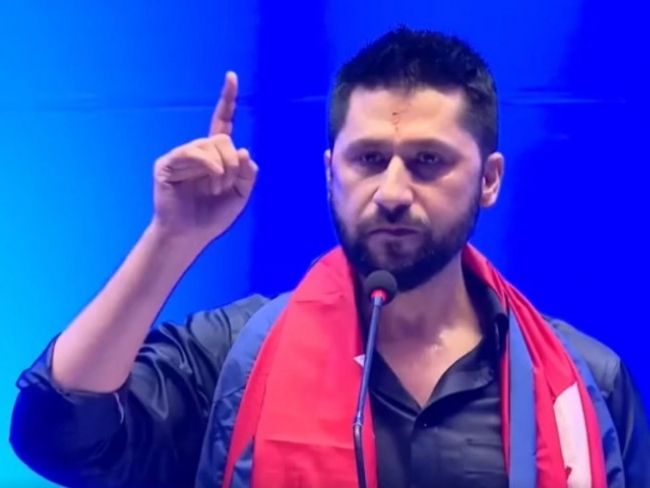
Kulman Ghising is a renowned Nepali electrical engineer and a legend in the country’s recent history. He is best known as the man who ended the crippling load shedding and reshaped Nepal’s power sector, improving the daily lives of millions of people. Under his forward-looking leadership at the Nepal Electricity Authority (NEA), the nation moved from constant power shortages to reliable electricity. At the same time, he turned the NEA from a chronically loss-making institution into a profitable and efficient organization. Because of these achievements, he rose from being an engineer to becoming a national hero. This biography looks at his life, education, and career, showing how his vision and determination brought lasting change to Nepal.
Quick Facts
- Full Name: Kulman Ghising
- Born: November 25, 1970
- Birthplace: Bethan, Ramechhap District, Nepal
- Nationality: Nepali
- Profession: Electrical Engineer, Administrator
- Known For: Eliminating electricity load-shedding in Nepal
- Positions Held:
- Minister of Urban Development,
- Managing Director of Nepal Electricity Authority (NEA),
- Minister of Energy, Water Resources and Irrigation,
- Minister of Physical Infrastructure and Transport
- Education: Bachelor of Electrical Engineering (Regional Institute of Technology, Jamshedpur, India), Master’s in Power Systems Engineering (Pulchowk Engineering Campus, Nepal), MBA in Management (Pokhara University)
Early Life and Education
Kulman Ghising was born into a small family in the rural Bethan village of Ramechhap district in Nepal. He started his primary education in the village and later moved to Kathmandu to continue his studies. There, he completed his intermediate degree at Amrit Science College. He then received a scholarship to study Electrical Engineering at the Regional Institute of Technology in Jamshedpur, India. After earning his bachelor’s degree, he returned to Nepal and completed a master’s in Power Systems Engineering at Pulchowk Engineering Campus, Tribhuvan University. To strengthen his administrative and leadership abilities, he also went on to earn an MBA in Management from Pokhara University.

Kulman Ghising’s Journey to End Load-Shedding
- Early Career at NEA
Ghising joined the Nepal Electricity Authority (NEA) in 1994, starting off as an electrical engineer. He gained a wide range of experience in multiple fields such as the distribution of power, project management, and operation of systems for over two decades. He worked as a Project Chief of the Chilime Hydropower Plant before leading the NEA.
- The NEA Managing Director (First Term) (2016-2020)
In September 2016, NEA gave Kulman Ghising the position of the Managing Director. At that time Nepal was experiencing a serious energy crisis, with 18 hours of power cuts per day. This extended load-shedding in Nepal destroyed industries and made everyday life a challenge to millions of people.
Taking a multi-pronged approach to the crisis, Ghising introduced a strategic plan in a few months:
- Optimized Power Distribution: He abolished the discriminatory practice of giving a continuous power supply to large industries at the cost of the general public. He reorganized the load distribution system so as to have a more balanced supply.
- Less System Losses: He initiated aggressive anti-electricity theft and technical losses campaigns, which were the primary causes of the power crisis.
- Effective Hydropower Control: He optimized the schedule of hydropower generation by storing water during off-demand periods so that there could be an adequate supply during the peak periods.
- Public Awareness: He undertook campaigns among the people to promote energy saving and discourage use of appliances that use a lot of power during peak times.
These revolutionary NEA reforms brought a historic result. By 2017, authorities proclaimed Kathmandu and other big cities to be load-shedding free. By May 2018, all the regions of the country, including industrial ones, had no power cuts.
Reappointment and Additional Contributions (2021-2025)
Following a few months in the absence from the top post, in August 2021, P.M. Sher Bahadur Deuba appointed Kulman Ghising back to the position of Managing Director, as per the Nepalese citizens’ demand. During his second term in power, he focused on:
- Grid Expansion: Access of electricity to remote and rural areas of Nepal, and attaining more than 90 percent of household electrification.
- Modernization of the infrastructure: Initializing underground cabling projects and installation of smart meters to enhance service delivery and eliminate technical losses.
- Cross-Border Electricity Trade: Intensifying and broadening power trade agreements with adjacent nations, mainly India, to handle excess energy and provide a stable supply.
In March 2025, the government of P.M. KP Sharma Oli removed Kulman Ghising from his position as the Managing Director of the Nepal Electricity Authority (NEA).
Cabinet Minister: A New Chapter (2025)
On September 8, 2025, Generation Z launched a major protest against corruption in Prime Minister KP Sharma Oli’s government. The protest, later called the “Gen Z protest,” forced Oli to resign. On September 12, President Ram Chandra Poudel formed an interim government and appointed Sushila Karki as the first female Prime Minister in the history of Nepal. She then appointed Kulman Ghising to three ministerial positions: Minister of Urban Development, Minister of Physical Infrastructure and Transport, as well as Minister of Energy, Water Resources and Irrigation in the interim cabinet on September 15.
This transition represents a new beginning for Ghising. It demonstrates the government’s and the people’s faith in his capacity to produce measurable outcomes for the country.
Kulman Ghising’s Achievements and Legacy
Kulman Ghising is much more than just a person who lights the lamps. He has left behind his mark of institutional change and renewed popular confidence. His most notable accomplishment that directly touched the lives of millions and triggered the economy of Nepal was the so-called Ended Load-Shedding. He changed NEA, which was a loss-making organization with debts, into one of the most profitable public corporations in Nepal with a cumulative profit of over NPR 11 billion.
His story is an inspiring case of how a committed public servant can bring massive change in a country. The immense love, support, and respect he earned from the Nepali people were not just a matter of fame; they were a political force. This widespread support from the people directly influenced his appointment as a cabinet minister.
You May Also Like:


Comments are closed